How Engineers Are Fixing the Grid
Fix #1: Bury the Lines
One major fix: put the power lines underground. No wind, no flying branches, no falling trees — the wires are literally out of the storm's reach.
NPR interviewed Ted Kury, an energy researcher at the University of Florida, who explained that burying lines removes the risk of losing power from a snapped pole or a falling tree branch.
Hu, Winnie. "Would Burying Power Lines Reduce Power Outages?" NPR, 29 Aug. 2011. npr.org/2011/08/29/140042767
Overhead
Exposed to wind & debris
Underground
Below grade
Fix #2: Decentralize the Grid
The second fix: decentralize the grid. Instead of one giant power source feeding everyone through one long chain, break the system into smaller microgrids that can run independently. It's like the difference between one giant water balloon popping and losing everything at once, versus a dozen small balloons — popping one doesn't drain the rest.
A microgrid is a small power zone—sometimes a neighborhood, campus, or group of hospitals—that can disconnect from the main grid and still generate or distribute power locally.
How a smart grid fits in
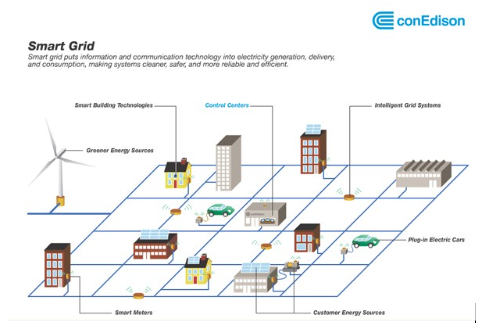
Image credit: Con Edison smart grid infographic, used as a visual aid.
A smart grid adds sensors, control centers, and two-way communication to the delivery of power. That supports everything we've covered on this site:
- Microgrids — local areas (homes, solar, EV chargers) that can keep running when the main grid is down
- Fault detection — smart grid systems help crews locate outages faster, including on buried lines
- Resilient cities (SDG 11) — cleaner, safer, more reliable power for communities after a storm